Monday, December 18, 2023

Traditional dances contribute to teenage pregnancy in Kibaha


By  Deogratius Koyanga, Kibaha

The existence of traditional dances that young girls play in the Pwani region has contributed to the existence of early marriage and pregnancy and has prevented girls from reaching their goals, including becoming leaders in the community.


Pangani Ward in Kibaha Town Council leaders and Participatory Action Research (PAR) 
participants, during the ward-level feedback 


Speaking during a ward-level feedback session on the participatory action research (PAR) conducted by Tanzania Gender Networking Programme (TGNP), for ward leaders at Pangani ward, Kibaha Town Council, in Pwani Region, the ward councillor, Augustino Mdachi, said that teenage pregnancy is caused to a large extent by the presence of customs and traditions that lead to children being exposed to risky environments.

The councillor also said that another reason is the walking distance to secondary school education, as girls have to walk long distances from the Vikawe streets to Kidimu Secondary School, which is located in the ward headquarters.


Participants presented the key issues through the ward map. 


The participatory action research, which involves community-based research, was conducted by the Tanzania Gender Network (TGNP), as part of the implementation of the project to empower the voices of women, girls and people with disabilities in leadership and the right to own resources, funded by UNWomen in the council.

TGNP and UNWomen are working with the Kibaha Town Council to build capacity for the community to change attitudes, customs and traditions that contribute to women, girls and people with disabilities being unable to participate in leadership and decision-making positions at various levels and to look at the challenges that contribute to this group not owning resources.


"The distance problem is the source of these childhood pregnancies, which contribute to a large extent to girls losing their dream of getting an education and becoming tomorrow's leaders. For example, girls who walk the entire distance from Vikawe to Kidimu are a major problem and can lead to pregnancy. We are continuing with the process, we have already started the process of getting another secondary school in Vikawe to solve this problem."


Findings presented through the Poem 

The PAR participants also proposed that if parents protect their daughters by preventing them from participating in traditional dances, and ensuring that only those who have reached the age of adolescence and adulthood are involved in traditional dances like ‘Unyago’, the problem of teenage pregnancy will end. They also proposed that girls who are involved in  ‘unyago’ dances should not be released from inside with their chests exposed, as this humiliates them and makes them lose the courage to be leaders or to stand in front of people.

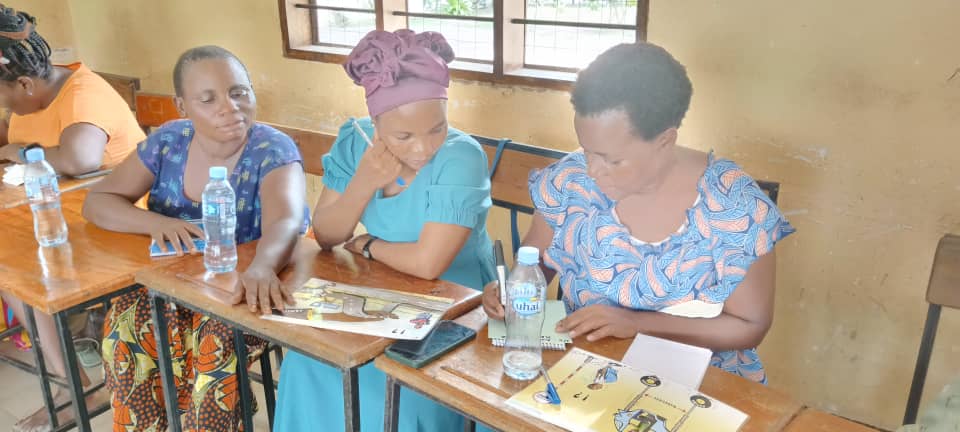
Cartoons and pictures were used to provoke debate among the Participants


The Vikawe Street chairperson, Anas Bwanari, said that teenage pregnancy is a major problem in his street, and the reasons he sees are due to marital conflicts, the existence of divorce, where children are raised by one parent or by foster parents who also abused them sexually.

"….. sexual violence prevents women from achieving their goals, including owning resources, benefiting from existing resources and becoming good leaders of tomorrow. We recommend the existence of self-awareness education for the entire community, to eliminate the problem of teenage pregnancy, but also to reduce sexual violence against women."

Earlier, giving details about the feedback exercise that took place, the PAR facilitator from TGNP, Deogratius Temba, said that after leading the community to conduct participatory action research, various issues have been identified and ranked in priorities, where the issue of irresponsible leadership, teenage pregnancy and oppressive customs and traditions were seen as the reason why women, girls and people with disabilities are unable to participate fully in leadership and decision-making positions and also in resource ownership.

Participatory action research  (PAR), conducted by TGNP aims to build communities from an gender analytical perspective by identifying opportunities and challenges that surround them, analyzing the obvious causes, and the root causes of the problem, and setting up action plans to implement or make recommendations for solving the problem.

It is a concept used to change communities from a perspective of relying on the government to do everything and making communities propose their solutions using the resources surrounding them in collaboration with leaders. It also removes conflicts between communities and their leaders.

Drama 


Ngoma, unyago zachangia mimba za utotoni Kibaha

Na Mwandishi wetu 

Uwepo wa ngoma za jadi wanazochezwa wasichana wadogo kwa jamii ya Mkoa wa Pwani kumechangia uwepo wa ndoa na mimba za utotoni na kusababisha wasichana kuhsindwa kufikia ndoo zao ikiwepo kuwa viongozi katika jamii.
Picha ya pamoja kati ya Viongozi wa Kata na washiriki wa Uraghibish, baada ya mrejesho wa Kata na kusikia mtazamo wa viongozi kutokana na amsuala yaliyoibuliwa

Akizungumza wakati wa zoezi la mrejesho wa uraghibishi (PAR), kwa viongozi wa Kata ya Pangani, Halmashauri ya Mji wa Kibaha, Mkoani Pwani, Diwani wa kata hiyo, Augustino Mdachi, Alisema kwamba Mimba za utotoni zinasababishwa kwa kiasi kikubwa na uwepo wa mila na desturi zinazopelekea watoto wa kike kuingizwa kwenye mazingira ya vishawishi na hatarishi. Aidha, Diwani huyo amesema pia, sababu nyingine ni umbali wa kupata elimu ya sekondari kwani wanafunzi wanatembea umbali mrefu kutoka mitaa ya Vikawe Bondeni na Vikawe shule kwenda shule ya sekondari Kidimu iliyoko makao makuu ya Kata.

washiriki wakiwa katika kujadili picha chokozi za katuni


 Uraghibish huo ambao unahusisha utafiti shirikishi wa jamii, umefanywa na shirika lisilo la kiserikali la Mtandao wa Jinsia Tanzania (TGNP), kama sehemu ya utekelezaji wa Mradi wa kuwezesha sauti za wanawake, wasichana na watu wenye ulemavu, katika uongozi na haki ya kumiliki rasilimali, unaofadhiliwa na shirika laUmoja wa Mataifa linaloshughuikia masuala ya wanawake (UNWomen) katika halmashauri hiyo. TGNP na UNwomen wanashirikiana na Halmashauri ya Wilaya ya Kibaha, kujenga uwezo kwa jamii, kujitambua, kubadilisha mitazamo, mila na desturi ambazo zinachangia wanawake, wasichana na watu wenye ulemavu, kushindwa kushiriki kwenye nafasi za uongozi na maamuzi katika ngazi mbalimbali na kuangalia vikwazo vinavyochangia kundi hilo kutokumiliki rasilimali. 

washiriki wakiwasilisha ramani ya Kata, kuonesha fursa na changamoto na maeneo hatarishi kwa jamii


 “Tatizo la Umbali ni chanzo cha hizi mimba za utoto ambazo zinachangia kwa kiasi kikubwa wasichana kupoteza ndoto yao ya kupata elimu na kuja kuwa viongozi wa kesho. Mfano wasichana wanaotembea umbali wote kutoka Vikawe hadi Kidimu ni tatizo kubwa na linaweza kusababisba mimba. Tunaendelea na utaratibu,tumeshaanza mchakato wa kupata shule nyingine ya sekondari Vikawe ili kuondoa tatizo hilo” Aidha, washiriki wa Utafiti huo walipendekeza kwamba, endapo wazazi watawalinda watoto wa kike, kwa kuzuia ushiriki wao kwenye ngoma za unyago, na kuhakikisha wanaochezwa unyago ni wale waliofikia umri wa ujana na utu uzima, tatizo la mimba za utotoni litakoma. 
washiriki wakiigiza kuonesha jinsi ndoa za utotoni zinavyojitokeza kwenye kata hiyo kutokana na ngoma za unyago wanazo chezwa wasichana wadogo


Pia walipendekaza kuzuia wasichana wanaochezwa ngoma za unyago kutokutolewa ndani wakiwa kifua wazi kwani inawadhalilisha na kuwakosesha ujasiri wa kuwa viongozi au kusimama mbele za watu.f Naye mwenyekiti wa Mtaa wa Vikawe Anas Bwanari, alisema kwamba kwenye mtaa wake mimba za utotoni ni tatizo kubwa ambapo sababia anazo ziona yeye ni kutokana ana migogoro ya ndoa, uwepo wa talaka, ambapo watoto wanalellewa na mzazi mmoja au kulelewa na wazazi wa kufikia ambao pia huwafanyia vitendo vya Ukatili wa KIjinsia. “vitendo vya Ukatili wa Kijinsia vinasababisha wanawake kushindwa kufikia malengo yao, ikiwepo kumiliki rasilimali, kunufaika na rasilimali zilizopo na kuwa viongozi wazuri wa kesho. Tunashauri uwepo wa elimu yakujitambua kwa jamii nzima, ili kuondoa tatizo la mimba za utotoni, lakini pia kupunguza Ukatili wa Kijinsia kwa wanawake”alisema Awali akitoa maelezo juu ya zoezi hilo lilofanyika, Mwezshaji wa uraghibish kutoka TGNP, Deogratius Temba, alisema kwamba, baada ya kuwaongoza wanajamii kufanya uraghibish masuala mbalimbali yameibuliwa na kupangwa katika vipaumbele, ambapo suala la Uongozi usiowajibika, Mimba za utotoni na mila na desturi kandamizi yalionekana ni sababu ya wanawake, wasichana na watu wenye ulemavu kushindwa kushiriki kikamilifu kwenye nafasi za uongozi na maamuzi na pia katika umiliki wa rasilimali. Uraghibishi unaofanywa na TGNP, unalenga kuijenga jamii, katika mtzamo wa kiuchambuzi kwa kuibua fursa na changamoto zinazowazunguka, kuchambua sababu za wazi, za kina kiini cha tatizo, na kuweka mikakai ya kutekeleza au kutoa mapendekezo ya utatuzi wa tatizo. Ni dhana inayotumika kuibadilisha jamii kutoka katika mtazamo wa kuitegemea serikali kufanya kila kitu, na kuifanya jamii kupendekeza njia zao za utatuzi kwa kutumia rasilimali zinazowazunguka kwa kushirikiana na viongozi. Na pia inaondoa migogoro kati ya jamii na viongozi wao.


Tuesday, November 28, 2023

Bridging the Gap: Digital Inclusion for Tanzanian Youth Vulnerable to Violent Extremism


By Dr. Fatma Waziri

In the Southern Regions of Tanzania, where the struggle against youth involvement in violent extremism is both a moral and strategic imperative, the Dumisha Amani project emerges as a beacon of hope. Implemented within the districts bordering Mozambique, such as Kilwa, Nachingwea, Mtwara, Tandahimba, Tunduru, Songea Rural, and Nyasa, this initiative uncovers the stark challenges faced by Tanzanian youth: economic disparities, limited educational opportunities, and a digital divide. Recent data from World Bank, reveals a poverty rate of approximately 25.7%, emphasizing the urgent need for interventions to uplift the vulnerable youth population.


In considering the status of literacy that have been observed in the project area; the educational landscape in Tanzania reveals a stark disparity that amplifies the challenges faced by its youth. UNESCO's recent data, indicating a net enrolment rate in secondary education of merely 44.8%, underscores the persistent educational gaps that hinder the holistic and equitable development of the country's younger generation. This deficiency not only limits their access to quality education but also becomes a contributing factor to the vulnerability of youth to extremist ideologies.


Compounding this educational deficit is the digital divide illuminated by the International Telecommunication Union (ITU). As of 2023, a mere 44.8% of Tanzanians have access to the internet. This glaring statistic further emphasizes the limitations imposed on the youth, curtailing their exposure to diverse perspectives and essential educational resources and other opportunities available online. In an era where digital literacy is increasingly pivotal, such restricted access inhibits the youth from harnessing the full potential of the internet as a tool for economic, education, self-improvement, and global connectivity.

The confluence of these educational and digital disparities creates a formidable barrier for Tanzanian youth, hindering not only their academic growth but also their ability to navigate an interconnected world. Addressing these gaps becomes imperative not only for the empowerment of individuals but also for the overall resilience and progress of the nation. Initiatives that bridge these divides, such as the Dumisha Amani project, emerge as crucial stepping stones towards a more inclusive and empowered Tanzanian youth, ready to shape a brighter future.


Upon the successful implementation of the Dumisha Amani Project, a collaborative effort between GPF and UNDP in partnership with targeted youth in their respective districts, this initiative, also involving the active engagement of Local Government authorities and the Prime Minister's office, exemplifies a comprehensive approach to fostering inclusivity and equitable development in the region.


Through the establishment of four youth centers, the Dumisha Amani Project not only enhances digital connectivity but also directly contributes to expanding internet access among the youth, thereby opening doors to a world of information and opportunity.

The inclusion of digital literacy programs, integrated into the Dumisha Amani Project's youth engagement and capacity-building initiatives, becomes a crucial component. These programs ensure that the youth in these regions are equipped with the necessary skills to navigate the online world responsibly, promoting critical thinking and discernment.


Creating more doors of opportunities and hope to the youth, as emphasized in the Dumisha Amani Project, becomes a catalyst for skill development and employment opportunities. Drawing on data from the International Labour Organization (ILO) indicating a growing demand for digital skills in the job market, the project, through partnerships with tech companies, provides additional resources and expertise to support youth in developing digital skills aligned with the evolving demands of the modern workforce.


By addressing economic disparities, educational gaps, and limited access to information, the Dumisha Amani Project empowers Tanzanian youth to actively counter extremist narratives. The integration of digital inclusion strategies, coupled with the collaborative efforts of GPF, UNDP, the Prime Minister's office, Local Government authorities and youth, signifies a transformative journey toward lasting peace and sustainable development, fostering a more inclusive, resilient, and peaceful society in Tanzania.


Saturday, November 18, 2023

WiLDAF conducts Gender Equality Training for Rafiki SDO


By Deogratius Koyanga, Shinyanga

The Women in Law and Development in Africa (WiLDAF) has conducted capacity-building training for the staff and management of Rafiki SDO in Shinyanga on how to incorporate gender issues into the organization's programs and overall structure.


These training sessions are part of a project funded by the Swedish International Development Agency (Sida) through Save the Children-Tanzania. The project aims to enhance the capacity of civil society organizations, strengthen institutional systems, and amplify the voices of children to discuss, self-manage, and demand their fundamental rights. The project is implemented in collaboration with WiLDAF, RAFIKI SDO, and five other partners.

Speaking at the training, Acting Executive Director of RAFIKI SDO, Tangi Clement, expressed gratitude to WiLDAF for providing gender experts to impart this knowledge. She emphasized that the training has opened their eyes to how they address gender issues as an institution and how the organization's programs target gender-related challenges in the community, especially among project beneficiaries.

"We are very grateful to WiLDAF for providing us with a Gender specialist for this session. We, as RAFIKI SDO, are still learning in the area of Gender, and this is a crucial opportunity that we have received. We will ensure to implement what we have learned, including extending this knowledge to other employees who did not participate and our stakeholders such as district councils for further awareness," said Tangi.

She added that during the workshop, they agreed that there is a need for a review of internal policies and human resources guidelines to create an enabling environment for pregnant women employees to have rest periods and dedicated spaces.

Additionally, they proposed that the review of the Gender policy should align with the inclusion of Gender Equality and Justice issues for people with disabilities and breastfeeding mothers, ensuring they receive full support while engaged in the organization's activities. "This will require policy changes, submission to management and the board for their approval, but it's a positive thing, and we believe they will agree," she added.


They also outlined a strategy to prioritize advocacy in district councils to allocate a gender Responsive Budget. This would enable girls to study and stay safe both within and outside of school, providing lunch meals at schools to reduce absenteeism and early pregnancies, constructing dormitories, and facilitating secondary school girls to access sanitary towels.


WiLDAF facilitator, Deogratius Temba, expressed the organization's hope that significant institutional changes would occur after the training. He highlighted the participants' commitment to putting effort into institutional changes so that everything within the organization reflects a gender perspective.

He added that the training led participants to agree on a review of RAFIKI SDO's gender policy for 2022 and its Strategic Plan (2020-2024) to focus on gender equality and allocate an internal budget to address gender-related challenges.

Eliud Mtalemwa, the Program Manager for Rafiki SDO in the Geita region, stated that the training helped the organization see itself more positively, recognizing how it manages gender issues and identifying gaps. He stressed the need to establish gender guidelines to govern and enforce gender-related decisions within the organization. "We have observed that women participate in our activities and decision-making positions, but we lack a guiding document that obliges us by numbers, specifying how many women should be in those positions. With the knowledge we have gained here, we will improve by revisiting our operational tools," said Mtalemwa.


WiLDAF yafanya mafunzo ya Usawa wa Kijinsia kwa Rafiki SDO


Na Deogratius Temba, Shinyanga

Shirika la Wanawake katika Sheria na Maendeleo Barani Afrika (WILDAF),imefanya mafunzo ya kujenga uwezo kwa wafanyakazi  na Menejimenti ya Shirika la RAFIKI SDO la Shinyanga, namna ya kuingiza masuala ya Kijinsia katika Programu na muundo wa shirika kwa ujumla.

Wafanyakazi na Menejimenti ya Shirika la RAFIKI SDO  wakiwa pamoja na mwezeshaji baada ya mafunzo


Mafunzo haya ni sehemu ya mradi unaofadhiliwa na Shirika la Maendeleo la Sweden (Sida) kupitia Save the Children-Tanzania, kwa lengo la kukuza uwezo wa asasi  za kiraia, kuimarisha mifumo ya kitaasisi na kuongeza sauti za watoto kujadili, kujisimamia  na kudai haki zao za msingi,unaotekelezwa kwa ushirikiano  na WILDAF, RAFIKI SDO na wadau wengine watano.

Akizungumza katika mafunzo hayo, Kaimu Mkurugenzi Mtendaji wa RAFIKI SDO, Tangi Clement, mafunzo hayo yamewafungua macho kujiangalia Zaidi kwa undani jinsi wanavyotekeleza masuala ya Kijinsia kama taasisi lakini pia namna ambavyo program na miradi ya shirika inavyolenga kutatua changamoto za kijinsia katika jamii hasa wanufaika wa miradi.

“ tunaishukuru sana WILDAF kwa kutupatia mtaalamu wa Jinsia kutupatia elimu hii, bado sisi kama RAFIKI SDO tunajifunza kwenye eneo la Jinsia, ni fursa muhimu sana ambayo tumeipata, tutahakikisha tunayafanyia kazi kikami,ifu ikiwepo kupeleka elimu hii kwa wafanyakazi ambao hawakushiriki, lakini pia wadau wetu kama Halmashauri za wilaya tutawapa elimu hii sambamba na wanufaika wetu” alisema Tangi.


Ameongeza kwamba katika warsha hiyo, wamekubaliana kwamba kunahitajika mapitio ya sera za ndani kama mapitio ya mwongozo wa rasilimali watu ili kuweka mazingira wezeshi kwa wafanyakazi wenye ujauzito kupata muda wa kupumzika na iwepo sehemu maalum kwaajili hiyo.


Aidha wamependekeza kwamba, mapitio ya sera ya Jinsia yaende sambamba na kuingiza suala la Usawa na Haki kijinsia kwa watu wenye ulemavu na Mama aneyenyonyesha akiwa ndani shughuli za shirika kuhudumiwa yeye na mtoto wake kikamilifu. “ Hii itahitaji mabadiliko ya kisera, kuwasilisha kwa manajimenti na bodi ili kupata Baraka zao, lakini ni jambo nzuri tuna Imani watatusikiliza”aliongeza.

Pia, waliweka mkakati wa kuweka uzito katika uchechemuzi kwenye Halmashauri za wilaya ili kutenga bajeti yenye mrengo wa Kijinsia aitakayowezesha watoto wa kike kusoma na kuwa salama ndani nan je ya shule kama kupata mlo wa chakula cha mchana shuleni ili kupunguza utoro na mimba za utotoni, kujenga mabweni na kuwezesha wasichana wa shule za sekondari kupatia taulo za kike.


Naye mwezeshaji kutoka WiLDAF, Deogratius Temba, amesema kwamba, WiLDAF inamatumaini kwamba, baada ya mafunzo hayo, mabadiliko makubwa ya kitaasisi yatatokea kwani washiriki wameweka ahadi (commitiment) ya kuweka nguvu kwenye mabadiliko ya kitaasisi ili  kila kitu kinachofanyika ndani ya shirika kiweze kuwa na mtazamo wa Kijinsia.

Ameongeza kwamba, mafunzo haya yamepelekea washiriki kukubaliana kupitia upya sera ya jinsia ya Rafiki SDO ya mwaka 2022, na Mpango Mkakati wake wa (2020-2024) ili kuweza kuzingatia usawa wa Kijinsia na kuweka bajeti ya ndani ya Taasisi itakayotatua changamoto wa Kijinsia.

“Sisi tuna Imani, kama walivyosema washiriki hawa wa RAFIKI SDO, Baada yam waka mmoja tukirudi hapa kutakuwa na mabadiliko makubwa” amesema Temba.

Kwa upande wake Programu Meneja wa Rafiki SDO Mkoa wa Geita, Eliud Mtalemwa alisema kwamba mafunzo haya yameisaidia taasisi kujiona vizuri Zaidi, kutambua namna inavyosimamia masuala ya Kijinsia na mapengo yalipo kwani  inahitaji kuweka miongozo ya Kijinsia itakayowasimamia.  “tumeona kwamba, wanawake wanashiriki kwenye shughuli zetu na kwenye nafasi za maamuzi lakini hatuna kitu kinachotuongoza na kutulazimisha kwa namba, kwamba wanawake wawe wangapi kwenye hizo nafasi, kwa elimu tuliyopipata hapa,tumefunguka, tutaboresha kwa kupitia upya nyenzo zetu za kiutendaji. “ alisema Mtalemwa.