Sunday, February 9, 2025

NAFASI YA MWANAUME KATIKA KULEA WATOTO NJITI

 NAFASI YA MWANAUME KATIKA KULEA WATOTO NJITI

·     Malezi ya Kangaroo yanahitaji wanaume kushiriki

·     Baadhi ya wanaume hulazimika kufunga biashara, kulea

·     Likizo ya uzazi kwa wanaume yashauriwa


Deogratius Temba, Mwandishi wa makala hii akizungumza na Ndugu Mohamed, wakati wa mahojiano maalum


Na Deogratius Temba

Serikali ya Jamhuri ya Muungano wa Tanzania, ipo katika mchakato wa kufanya marakebisho kwenye sheria kuu ya Ajira  na mahusiano Kazini, sura ya 366, ambapo moja ya kifungu cha sheria hiyo kinachofanyiwa marakabisho ni pamoja na kuongezwa kwa muda wa likizo kwa wanawake wanaojifungua watoto njiti.

Kifungu kinaeleza kwamba Mama aliyezaa motot njiti ataendelea kuwa likizo yenye malipo hadi zitimie wiki ya 36 ya ujauzito na baadaye aendelee na likizo yake ya uzazi kama kawaida.

Katika mswada huo, marakabisho yanafanyika kwenye sheria ya msingi ya awali kwamba: Kifungu cha 33 cha muswada kinaeleza kwamba “  Sheria inarekebishwa katika kifungu cha 33 kwa- (a) kuongeza mara moja baada ya kifungu kidogo (7) yafuatayo: "(8) Mfanyakazi anayezaa mtoto kabla ya muda wake ana haki ya likizo ya uzazi iliyolipwa kuanzia tarehe ya kujifungua hadi kukamilika kwa wiki thelathini na sita za ujauzito na hadi kipindi cha likizo ya uzazi kilichotolewa chini ya kifungu kidogo (6) katika mzunguko wa likizo.";

Inaelezwa kwamba, lengo la marekebisho haya ya sheria, sio upendeleo tu kwa wanawake, bali inalenga kulinda ustawi wa afya za watoto wanaozaliwa kabla ya wakati na kuhitaji muda wa kutosha wa aungalizi wa mama na Baba.  Mtandao wa Haki ya Afya ya Uzazi (SRHR), unaoratibiwa na Mfuko wa Wanawake Tanzania (WFT-T) wanapendekeza kuwepo kwa likizo ya kutosha ili kuhakikisha kwamba wanawake na wanaume wanapata nafasi ya kumlea mtoto njiti bila tatizo.

Mtandao wa Haki ya Afya ya Uzazi, wakiongozwa na shirika la Doris Moleli Foundation, Shirikisho la vyama vya Wafanyakazi (TUCTA),  chini ya usimamizi wa WFT-T wanasema kwamba, ili kuongeza tija katika uzalishaji mali nchini na kujenga taifa la wetu wenye afya njema na nguvu kazi ya baadaye ni lazima kulinda afya na ukuaji wa watoto njiti.

“Kifungu kina tija kwa wafanyakazi waliojifungua kabla ya muda ili kuruhusu mzazi kuhudumia mtoto kwa ukaribu ili atengemee isipokua siku zilizotajwa hapo ziongezeke kutoka wiki 36 mpaka wiki 40 kwa sababu za Kiafya hasa makuzi ya mtoto” linasema moja ya pendekezo la Mtandao huo kwa kamati ya Kudumu ya Bunge ya Huduma za Jamii waliowasilisha kuhusu muswada huo.  Mtandao wa SHRSR, TUCTA na wengine wanapendekeza kwamba  likizo ya malipo ya wiki za kabla ya kujifungua ambazo mama angekuwa hajajifungua ziongezeke hadi wiki 40 kwasababu wanawake wengi hujifungua kati ya wiki ya 36 hadi 40 na ndipo ianze likizo rasmi ya uzazi.

Likizo inayopendekezwa ni kwa wanawake (Mama anayejifungua) na mume wake kwasababu za msingi ambazo ni kwamba, mtoto njiti anahitaji malezi ya pande zote na pia Mama aliyejifungua anahitaji usaidizi wa mwenza wake wakati huu.

Kwa mujibu wa sheria kuu ya ajira na mahusiano kazini nchini Tanzania, sura ya 366, vifungu 33  na 34 vinavyozungumzia likizo za watumishi, hakuna kabisa suala la likizo ya mama anayejifungua mtoto njiti, lakini kutokana na marekebisho haya yam waka 2025, kwa mara ya kwanza Tanzania itakuwa imegusia suala la mtoto njiti kwenye sheria.

Kifungu cha 34 cha sheria n ahata kwenye muswada,  hakielezi kuhusu likizo ya uzazi kwa wanaume ambao wenza wao wanajifungua watoto njiti, hii inamkosesha baba nafasi ya kushiriki katika kumhudumia mtoto wake au  kumsaidia mwenza wake jukumu ya akulea.

Jambo la msingi la la kiafya kwa mtoto aliyezaliwa Njiti, ni kutunzwa kwa mfumo wa Kangaroo, ambao unamuhitaji mama kumweka mtoto kifuani muda wote ilia pate joto la mwili badala ya kutumia mashine ambazo ni gharama kubwa katika hospitali. Mama anayejifungua mtoto njiti anaweza kuruhusiwa kutoka hospitalini mapema na akakaa nyumbani na mtoto wake endapo atakuwa na usaidizi wa Baba wa mtoto katika kumsaidia kumweka mtoto kifuani (Kangaroo).

Utaratibu wa Kangaroo ulipendekezwa kwa mara ya kwanza mwaka wa 1978 na madaktari wa watoto wawili katika kitengo cha uzazi katika Hospitali ya San Juan de Dio huko Bogotá, Colombia. Leo hata Shirika la Afya Duniani (WHO) linasema njia hii ni bora zaidi.

Mohamed Saleh, ni Mume wa Dada Saada Nassor Mohamed, wakazi wa Dar es salaam nchini Tanzania ambaye amezaa watoto wawili (2)  kabla ya muda (njiti), Mohamed analeza jinsi avyowajibika kumsaidia mke wake katika malezi ya mtoto njiti ili kukoa maisha ya mtoto  lakini pia kupunguza gharama ambazo zingelipwa hosipitalini.

“tulipitia kwenye kipindi kigumu kwa babu tulipata mtoto njiti,gharama za Hopsitali zilikuwa kubwa, matunzo ya mtoto wodini ni Zaidi ya shilingi  200,000 kwa siku, lakini tulishauriwa kuondoka Hospitalini na tukatumia mfumo huu wa kangaroo, ambapo Mimi kama (Baba) nililazimika kusaidia mke wangu kumweka mtoto kifuani ilia pate joto”

Wakati mke wangu anajifungua hawa watoto Njiti, hasa huyu wa mwisho, nilitoa muda wangu mwingi, ilinilazimu kufunga biashara ili nikae nyumbani kumsaidia mke wangu kumtunza mtoto. Wakati tunaruhusiwa kutoka Hospitalini tulipewa masharti endapo tunataka mtoto apone, basi, asishikwe na mtu mwingine yeyote isipiokuwa mimi na Mama. Niliamua, ili mtoto apone na kukua, ni lazima nitumie muda huo kumlinda na kumtunza kwa kuzingatia masharti ya kulea mtoto njiti” anasema Mohamed

“ mfumo wa Malezi ya Kangaroo, una gharama kubwa, nililazimika kuacha kazi kwa miezi 4, nikafunga biashara zangu ili nipate muda wa kumlea mtoto apate joto na kukua”  anaongeza Mohamed.

Mohamed anawaasa wanaume wote kuwa karibu na wenza wao hasa wakati wa ujauzito, kuhakikisha malezi ya mimba ni ya wote, lakini pia wanawake wanapo zaa watoto njiti wasitengwe au kufanyiwa ukatili au kutelekezwa. “Nafasi ya Baba ni muhimu sana ili kuwa na mtoto mzuri mwenye afya njema. Mwanaume akishiriki kumtunza mtoto ataokoa gharama za matibabu, kwasababu mtoto hatapatwa na maambukizi” anaongeza Muhamed

Kwa upande wa Bi. Saada Nassor Mohamed, akizungumzia mchango wa Mume wake  wakati alipojifungua mtoto njiti anasema “ nilipojifungua mtoto njiti, kwanza sikuamini, nilipoona mtoto hana hata  umbo nzuri, nilistuka sana, nikamwambia daktari kwamba amenibadilishia mtoto, nilimuita mume wangu na kumweleza. Lakini alipofika alinitia moyo, alikaa na Daktari wakaelewana wakaniweka vizuri. Mume wangu tangu siku hiyo hakuniacha mbali, aliacha shughuli zake, akaanza kunisaidia katika malenzi ya Kangaroo, Nimeona mchango mkubwa sana wa Mume wangu” anasema Bi. Saada.

Kwa upande wake Mkurugrenzi Mtendaji wa Mfuko wa Wanawake (WFT-T) Tanzania, Bi. Rose Marandu, anasema kwamba changamoto ya uzazi wa kabla au kuzaa mtoto njiti  ni kubwa,  na linahitaji kuwekewa kipaumbele na serikali katika kutenga rasilimali fedha ili kuboresha huduma za afya, kuweka fedha kwaajili ya kuboresha huduma kwenye zahanati na vituo vya afya vijijini ili kuwezesha wanawake masikini wa vijijini kutokuhangaika kusaifiri mbali kufuata huduma katika hospitali kubwa.


Mkurugenzi Mtendaji wa Taasisi ya Doris Moleli, Foundation, Bi. Doris Moleli anasema kwamba, yeye alizaliwa mtoto njiti na kwa jinsi alivyoona changamoto wanazokumbana nazo wanawake wanaozaa watoto njiti, ameamua kujikita katika kupigania haki na kuteteza huduma za afya hasa kwa uzazi wa watoto njiti ziboreshwe.

Sizya Puya ni Mama wa watoto Njiti, ambapo kila uzazi aliopitia alipata mtoto njiti, na ameweza kulea  vizuri kwa kuzingatia masharti ya kulea na watoto wake wana afya njema na wanaendeela na masomo.

Sizya anaeleza kwamba, nafasi ya Mzazi wa kiume ni muhimu sana, kwa kuzingatia mahitaji ya kumelea mtoto njiti ni makubwa. “kuna suala la rasilimali fedha, inahitaji fedha kuanzia nyumbani kuboresha mazingira na usafi wa kila kitu, lakini gharama za matibabu, dawa, sindano, usafiri wa kwenda hospitalini na kurudi, lakini pia usaidizi wa nyumbani hasa mama anapokuwa anashinda ya kiafya kama maumivu ya mgongo, Baba atahitajika kumsaidia kumbeba mtoto” anaeleza Sizya.

Doris anasema kwamba “…Imetokea mara kadhaa wanawake wana acha kazi au kuachishwa kutokana na uzazi, mwaka 2017 tulianzisha hii agenda ya kuomba serikali iongeze siku za uzazi kwa mama anayejifungua mtoto njiti, mwaka  2018 tulishawishi wizara iongeze siku za likizo ya uzazi kwa  wanaume, lakini haikufanikiwa. Mwaka 2019, tuliamua kuunganisha nguvu kwa kiasi kikubwa na wadau wengine wengi Zaidi.  Baadaye WFT-T ilitusaidia kuunganisha nguvu na kuunda Mtandao wa SRHR ambapo tulipata  nafasi ya kuwa na sauti ya pamoja katika kupigania haki za wanawake na sasa tumefikia mafanikio ya kupata kifungu cha sheria.

Thursday, February 6, 2025

GIT, Sauti ya Jamii empowering Communities with Sustainable Energy

 GIT, Sauti ya Jamii empowering Communities with Sustainable Energy


By Deogratius Temba

Global Impact Transformation (GIT) recently held a workshop in Kipunguni, Dar es Salaam, teaching 66 people, including women, men, children, and people with disabilities, how to make alternative charcoal. This eco-friendly fuel helps reduce deforestation and promotes sustainable living, aligning with the UN's climate action goals (SDG 13) and contributing to gender equality (SDG 5) by empowering women economically.

Fatma Abdulrahman, Chairperson of Sauti ya Jamii-Kipunguni, emphasized the importance of community-driven solutions for environmental conservation and economic empowerment. "This workshop is more than just an environmental effort; it is about giving our communities the tools they need to create a better, more sustainable future," she stated.

Humphrey Evarist Ottaru, Coordinator from GIT, explained that alternative charcoal is a "game-changer" because it reduces the need to cut down trees, provides affordable energy, and creates economic opportunities.

Participants learned two methods of making alternative charcoal: one using rotten poultry food and another using cardboard boxes. They mixed materials like clay, cassava porridge, and water to create charcoal briquettes. Before the workshop, 97% of the attendees had never heard of alternative charcoal, showing how important this educational initiative is.

The workshop also highlighted the economic benefits of alternative charcoal, presenting it as a potential business opportunity. One facilitator noted, "For women, this project is a breakthrough in fighting poverty. It enables them to produce and sell an affordable fuel source while reducing the time spent collecting firewood, which is often an unpaid burden on them."

GIT plans to continue these workshops, build more partnerships, and advocate for policies that support the use of alternative energy.

Martha Nghambi, the Executive Director of GIT, emphasized the organization's focus on environment, sustainable energy, clean energy such as alternative charcoal production, and climate change, particularly as it relates to empowering women, children, and persons with disabilities. As she explained, " "At GIT, we believe that addressing climate change and promoting sustainable energy solutions go hand-in-hand with empowering women, children, and persons with disabilities. Our work with alternative charcoal production is a prime example. It protects our environment and creates economic opportunities, particularly for women, allowing them to become agents of change in their communities. In providing access to clean energy and sustainable livelihoods, we're building a more resilient and equitable future for everyone." - Martha Nghambi, Executive Director, Global Impact Transformation (GIT)


Wednesday, February 5, 2025

GIT, PPE Lead the Way in GBV Awareness

 GIT, PPE Lead the Way in GBV Awareness


By Our Reporter

Deogratius Temba

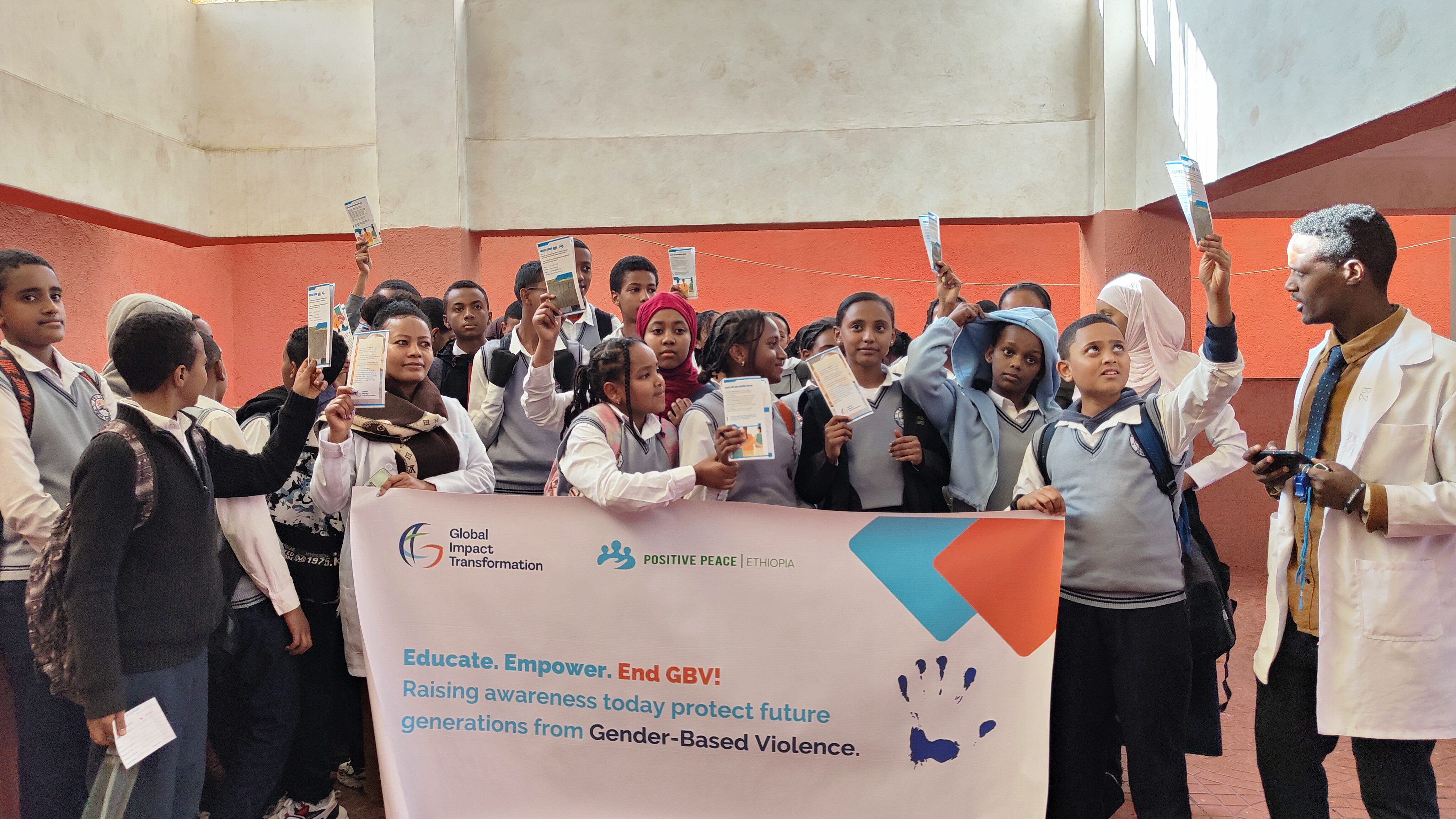
Positive Peace Ethiopia (PPE) and Global Impact Transformation (GIT) held an important Gender-Based Violence (GBV) awareness session at Vision Academy Elementary School. The session was part of a broader commitment to advancing the United Nations Sustainable Development Goal (SDG) 5, which aims to achieve gender equality and empower all women and girls. It also aligned with the African Union’s commitment to addressing gender-based violence as part of its Agenda 2063 for peace and prosperity in Africa.


The initiative aimed to educate the school community, including students and staff, on the various forms of GBV and how to effectively prevent and report such incidents. The session was designed to foster a safer and more respectful school environment by engaging everyone in crucial discussions about the long-term sustainability of the program.


A preliminary meeting was held with the school’s principal, Ato Biniyam, where he expressed his commitment to the initiative. "This program is vital in creating a safe space for our students," Ato Biniyam stated. "I will discuss its continuation with our higher administration to ensure its lasting impact." He further assured the facilitators that feedback would be provided during a follow-up meeting, highlighting his dedication to ensuring the program's success.


The GBV awareness session was led by Femihot Bogale, an experienced facilitator, with training coordinated by Chalachew Worku, Founding CEO of PPE. The session was interactive, with participants learning about the different forms of GBV, including physical, verbal, and emotional abuse, as well as cyberbullying. Prevention strategies such as promoting respect and empathy were emphasized, along with the importance of timely reporting of incidents.


“Students and teachers must collectively contribute to preventing GBV,” said Femihot Bogale. “Education is the most powerful tool in combating gender-based violence, and through initiatives like this, we can create a culture of respect and accountability.”


GIT’s commitment to peacebuilding and tackling GBV as part of its broader efforts to create peaceful and inclusive societies was reinforced throughout the session. This initiative supports GIT’s mission of fostering community resilience and promoting gender justice. As part of its ongoing commitment, GIT will continue to collaborate with schools and other local organizations to provide training and resources on preventing GBV and supporting victims.


The GBV awareness session at Vision Academy Elementary School marked a successful step toward fostering a safer environment for both students and staff. The active participation and commitment from all involved parties, especially Principal Ato Biniyam, ensure the program’s potential for long-term success. PPE and GIT look forward to continuing their partnership with the school to promote ongoing awareness and action against gender-based violence, in line with global, regional, and local commitments to gender equality and peacebuilding.


Monday, February 3, 2025

Waves of Change: Kidimbwi Beach Unites for a Greener, Safer Future

 Waves of Change: Kidimbwi Beach Unites for a Greener, Safer Future


By Deogratius Temba

Global Impact Transformation (GIT), in collaboration with the Local Government of Mbezi Beach and various environmental stakeholders, spearheaded a highly successful clean-up at Kidimbwi Beach.

The initiative aimed to restore the coastline’s natural beauty and underscored the urgent need for environmental stewardship and social responsibility. Through addressing waste pollution, promoting climate action under Sustainable Development Goal (SDG) 13, and fostering community unity, the event highlighted the intersection of environmental sustainability and public safety, including gender-based violence (GBV) concerns, aligning with SDG 5: Gender Equality.

The clean-up brought together a diverse group of participants, including local government leaders, students, environmental advocates, and GIT Champions. Ms. Sylvia Mkomwa, GIT’s Communication Specialist and General Manager at Calabar Group of Companies, officially inaugurated the event, emphasising the power of collective action.

“When communities unite to protect their environment, we create ripples of change that extend beyond conservation. A cleaner, safer beach is not just about aesthetics, it’s about ensuring that everyone, especially women and children, can enjoy public spaces free from threats and vulnerabilities,” she stated.

Volunteers engaged in two primary activities waste removal and tree planting. They collected plastic waste, discarded bottles, and other hazardous materials that endanger marine life and beachgoers. By eliminating these pollutants, the initiative improved safety, reduced health risks and rejuvenated the coastal ecosystem.

In addition, trees were planted along the beachfront to prevent coastal erosion and enhance biodiversity. These efforts contribute to long-term environmental sustainability, ensuring that future generations inherit a healthier planet.

Beyond its ecological benefits, the clean-up also served as a platform to address social challenges such as GBV and gender inequality, reinforcing SDG 5: Gender Equality. Polluted and neglected public spaces can become hotspots for insecurity, disproportionately affecting women and girls. Unsafe environments discourage free movement and limit access to recreational and economic opportunities.

Moreover, women’s involvement in sustainability initiatives is a crucial step toward inclusive leadership and social transformation. The active participation of female leaders, volunteers, and youth in the Kidimbwi Beach Clean-Up demonstrated that environmental advocacy can also serve as a tool for social empowerment and gender equality.

Martha Ng'hambi, the Executive Director of GIT, also highlighted the organization's commitment to making the environment safe and clean through collaboration with local government. "At GIT, we believe that protecting the environment goes hand in hand with ensuring the safety of the community, especially for women and girls who frequently use public spaces like beaches. Through our partnerships, we aim to create secure, well-maintained environments where everyone can thrive without fear," she stated.

The success of the Kidimbwi Beach Clean-Up serves as a reminder that maintaining clean and safe coastal areas requires sustained effort. Regular clean-up campaigns, environmental education programs, and stronger collaborations between stakeholders are key to preserving these achievements.

As the event concluded, many participants expressed their commitment to making environmental conservation a lifestyle, not just a one-time effort. “A clean environment fosters not only ecological health but also human dignity and security,” one volunteer remarked.

Intertwining environmental action with social advocacy, the Kidimbwi Beach Clean-Up exemplifies how local initiatives can drive meaningful, lasting change one wave at a time